Program Description
Subject & purpose of the training program:
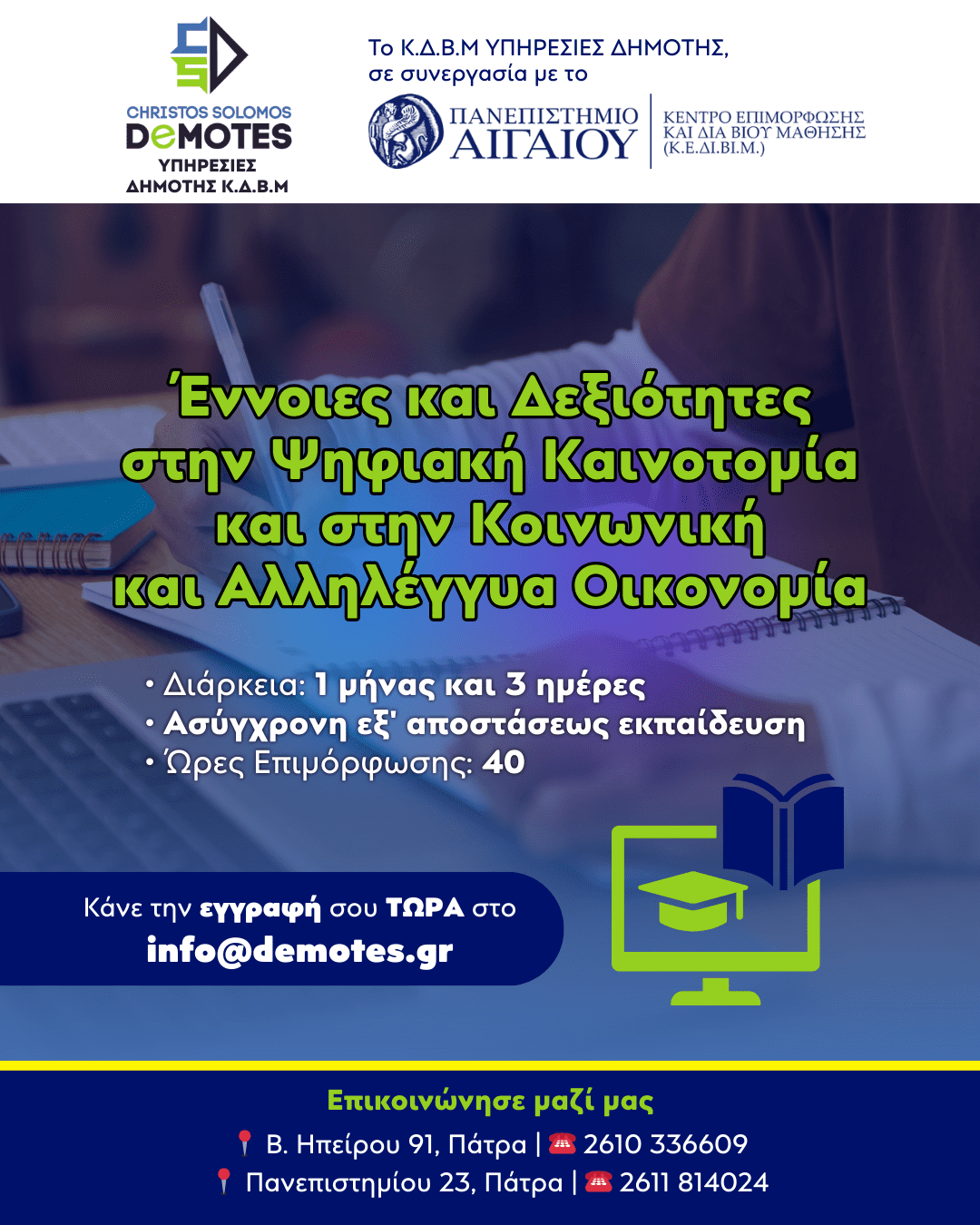
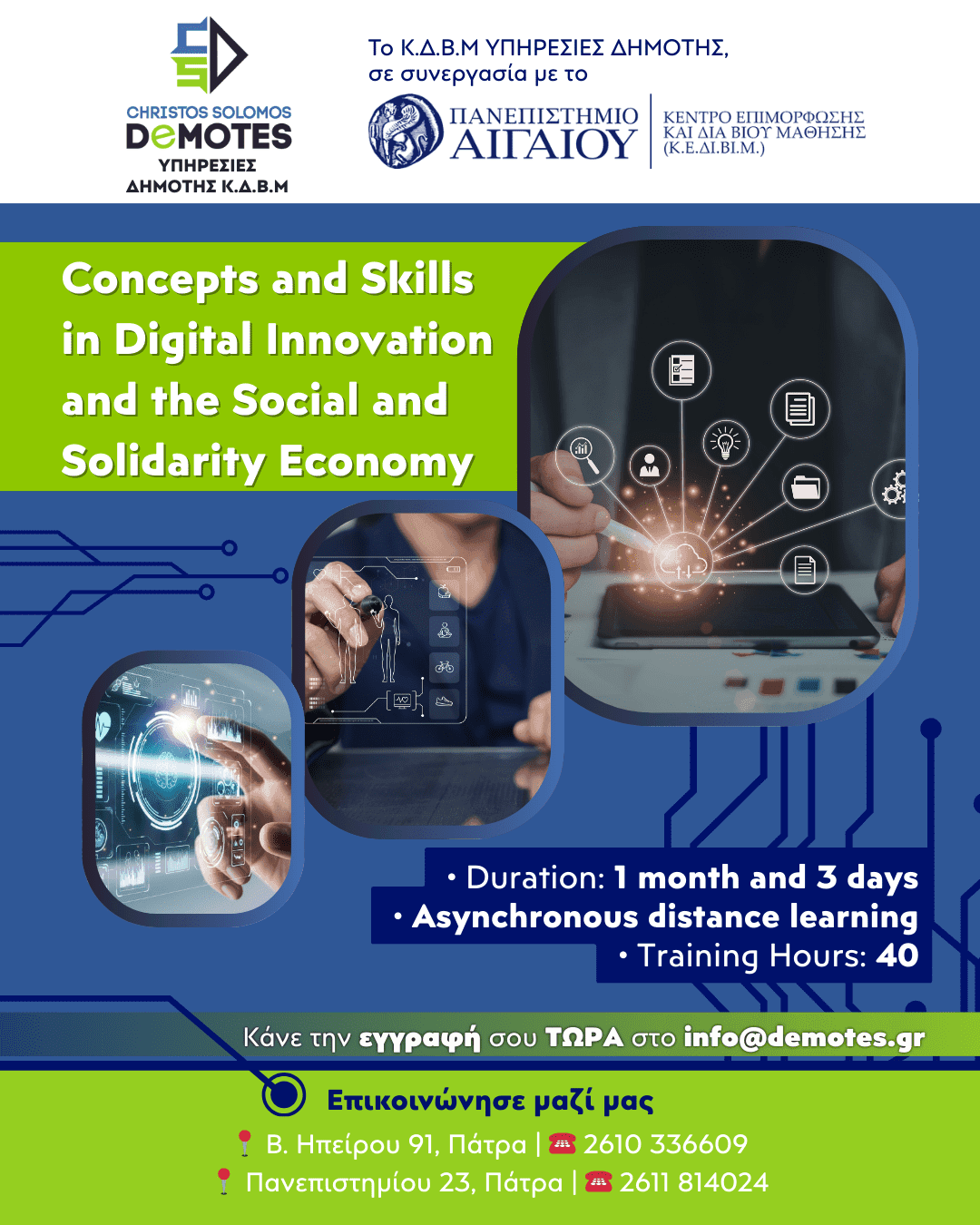
The Department of Geography of the University of the Aegean organizes and implements a 40-hour training programme that provides up-to-date and multidimensional knowledge on the topics of a) Innovation in the Digital Age and b) Social and Solidarity Economy. The teaching material is available in Greek.
The aim of the Training Programme is to support those who want to engage in the Social Economy to find positive opportunities in the labour market after adequate training and strengthening of their knowledge and skills. The training programme aims to promote good practices for stable and quality employment through socially innovative solutions, integrated lifelong learning and the development of their skills and knowledge. The programme is aimed at young people as well as people of all ages and nationalities who:
-Want to enter the labour market
-Want to expand their knowledge
-Want to acquire additional skills
The framework of the educational process contains:
-Asynchronous e-Learning based on teaching material provided on an e-learning platform for online training.
-Assessment with questionnaires for the successful completion of each teaching unit.
The two (2) Thematic Units of the programme are:
-Innovation in the Digital Age
-Social and Solidarity Economy
This programme is based on previous cycles of a successful programme. The relevant training material can be found on the programme website (https://elearning.youthshare-project.org).
Learning outcomes:
Upon completion of the programme, the participant will be able to:
1. Have some basic digital skills.
2. Know the basic concepts of social and solidarity economy and distinguish the advantages and disadvantages of social and solidarity economy.
3. Create primary texts and audiovisual content.
4. Use appropriate platforms for information on funding and promotion
5. Explore opportunities for joint initiatives and/or the creation of social enterprises that provide services and develop synergies with local economic entities.
[Online Distance Learning]
The courses will be implemented with asynchronous distance learning, through the electronic platform of CE-LLC where all the educational material will be posted.
Evaluation Methology:
Assessment will be by completion of questionnaires with closed questions. Successful completion of all sessions with a mark above 50% is required for successful completion of each Module.
Minimum requirements of the candidates:
Graduate of a tertiary programme / graduate of a post-secondary school
Computer literacy (no certification required)


 2610 336609
 ΒΟΡΕΙΟΥ ΗΠΕΙΡΟΥ 91